
An HSE inspection automation platform replaces paper checklists with mobile inspections, automatic workflows and live dashboards. Every site is inspected the same way, and every finding is tracked until it is closed. For a network spread across the UAE, it is the practical way to see safety performance as it happens, not weeks later.
This article explains how such a platform works, using a fuel distribution project delivered by Upturnist, a business transformation consultancy in Dubai. It follows a simple problem, solution and outcome structure. It then covers checklist design, escalation rules and a staged rollout, so you can plan your own system with confidence.
Key Takeaways
- An HSE inspection automation platform standardises checklists, captures photo and GPS evidence, and routes findings to the right people automatically.
- A well designed HSE inspection app for fuel stations turns scattered paper reports into one live view of compliance across the network.
- Results depend on clear checklists, sensible escalation rules and a staged rollout, not on the mobile app alone.
Why Paper Inspections Break Down Across Large Networks
Paper inspections work at one site with one inspector. They break down when a network spans hundreds of locations. Checklists drift, reports arrive late, and nobody can see which issues are still open. Management ends up making safety decisions from information that is days or weeks old, and the same risks keep coming back.
That was the starting point in our case study on an HSE inspection app for fuel stations across the UAE. Field inspectors relied heavily on paper checklists and manual reporting. The result was inconsistent inspection quality, delayed reporting and limited visibility into unresolved safety issues. Management lacked real-time information to monitor compliance, spot recurring risks and track corrective actions.
Fuel stations make the problem sharper. A filling station dispenses flammable fuel to the public, so fire hazards are part of daily work. Small lapses, such as a blocked emergency route or an expired extinguisher tag, need to be found and fixed quickly. A paper form in a supervisor’s car does not support that speed.
Paper also hides patterns. If the same fault appears at many stations, nobody sees it until someone reads every form. The business fixes symptoms site by site instead of fixing the root cause once. If this sounds familiar, you can talk through your current inspection process with us before choosing any tool.
What an HSE Inspection Automation Platform Actually Does
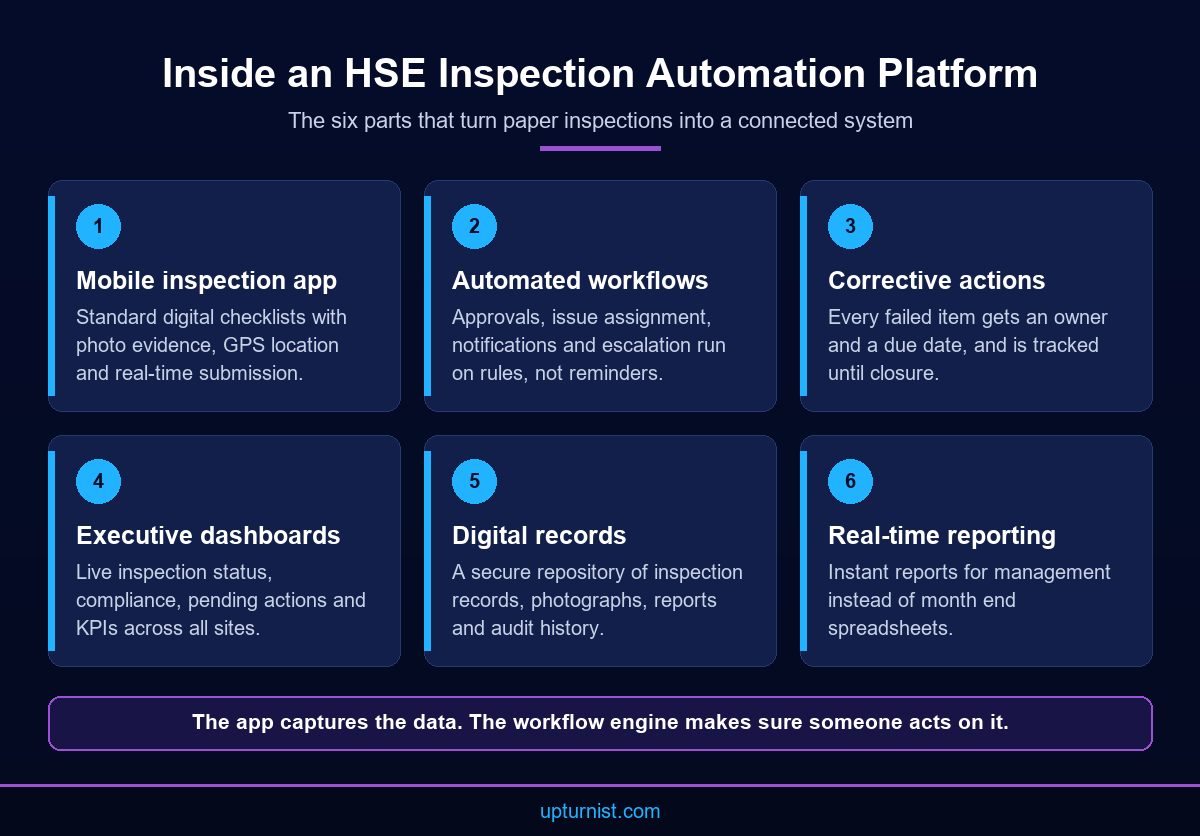
An HSE inspection automation platform digitises the full inspection lifecycle. Inspectors use a mobile app with standard checklists. Findings flow into approval and escalation workflows, and corrective actions are tracked until closure. Managers see everything on central dashboards, and every record is stored for audits. Each part depends on the others to work well.
- Mobile inspection app. Standard digital checklists with photo evidence, GPS location and real-time submission from the field.
- Automated workflows. Approvals, issue assignment, corrective actions, notifications and escalation run on rules, not reminders.
- Executive dashboards. Live status of inspections, compliance, pending actions and operational KPIs across all sites.
- Digital records. A secure repository of inspection records, photographs, reports and audit history.
- Real-time reporting. Instant reports for management instead of month end spreadsheets.
The mobile app gets most of the attention, but the workflow engine does most of the work. It decides who sees a finding, how fast they must act and what happens if they do not. When you compare options, test the workflow rules as hard as the app screens.
Connectivity is another practical test. Any HSE inspection app for fuel stations will meet sites with weak signal, so ask how the app behaves offline and how it syncs later. Also check how easily your HSE team can change a checklist without calling a developer. Our field operations automation solutions apply the same mobile first approach to site inspections and digital forms.
Inside the Fuel Distribution Case Study
The case study follows a clear problem, solution and outcome path. A leading fuel distribution company in the UAE moved from paper checklists to a centralised digital inspection platform. Upturnist designed and implemented it so every station is inspected the same way, every finding is tracked, and management sees live compliance across the whole network.
Inspectors were equipped with mobile applications, in effect an HSE inspection app for fuel stations. They used standardised digital checklists, captured photographs, recorded observations and submitted reports directly from the field. The platform routed findings through predefined approval and escalation workflows and tracked corrective actions until closure. Dashboards gave live visibility into inspection status, compliance performance, unresolved issues and operational KPIs across all stations.
The listed outcomes are practical. They include standardised inspection processes across all stations, faster identification and resolution of HSE issues, and improved compliance with internal HSE standards. The organisation also reduced manual reporting, gained better accountability through automated workflows and built a complete digital inspection history for audits.
Two lessons matter for any HSE inspection automation platform. Standard checklists made results comparable across every station. The workflows and dashboards kept corrective actions visible until closure, which a mobile form alone cannot do. To see how this could fit your sites, ask our consultants for a short walkthrough.
Designing Checklists and Escalation Rules That Work
Software alone does not improve safety. The checklist and the rules behind it decide whether an HSE inspection automation platform finds real risks or just produces more data. Good design keeps questions specific, makes evidence mandatory where it matters, and ties escalation to the severity of each finding. Each rule should be easy to explain.
Start from your procedures. Each checklist item should trace back to an HSE standard or procedure, so inspectors check what the business actually requires. If procedures are out of date, fix them first, and our guide on how to write SOPs your teams will follow is a useful place to start. Then apply a few practical rules:
- Write yes or no questions with a clear pass standard, not open prompts.
- Make a photo mandatory for every failed item.
- Grade findings by severity, using a simple scale everyone understands.
- Set a response time for each grade and escalate automatically when it is missed.
- Review checklist results regularly and remove questions that never fail.
Severity grading should follow sound risk thinking. The UK Health and Safety Executive describes managing risks at work as identifying hazards and judging how likely and how serious harm could be. It then asks employers to eliminate the hazard or control the risk. Your severity scale can mirror those two questions.
Fixes need the same discipline. The hierarchy of hazard controls ranks elimination first, then substitution, engineering controls, administrative controls and protective equipment. It helps decide which findings need a physical change and which need training or signage.
Rolling Out Mobile Inspections Across Hundreds of Sites
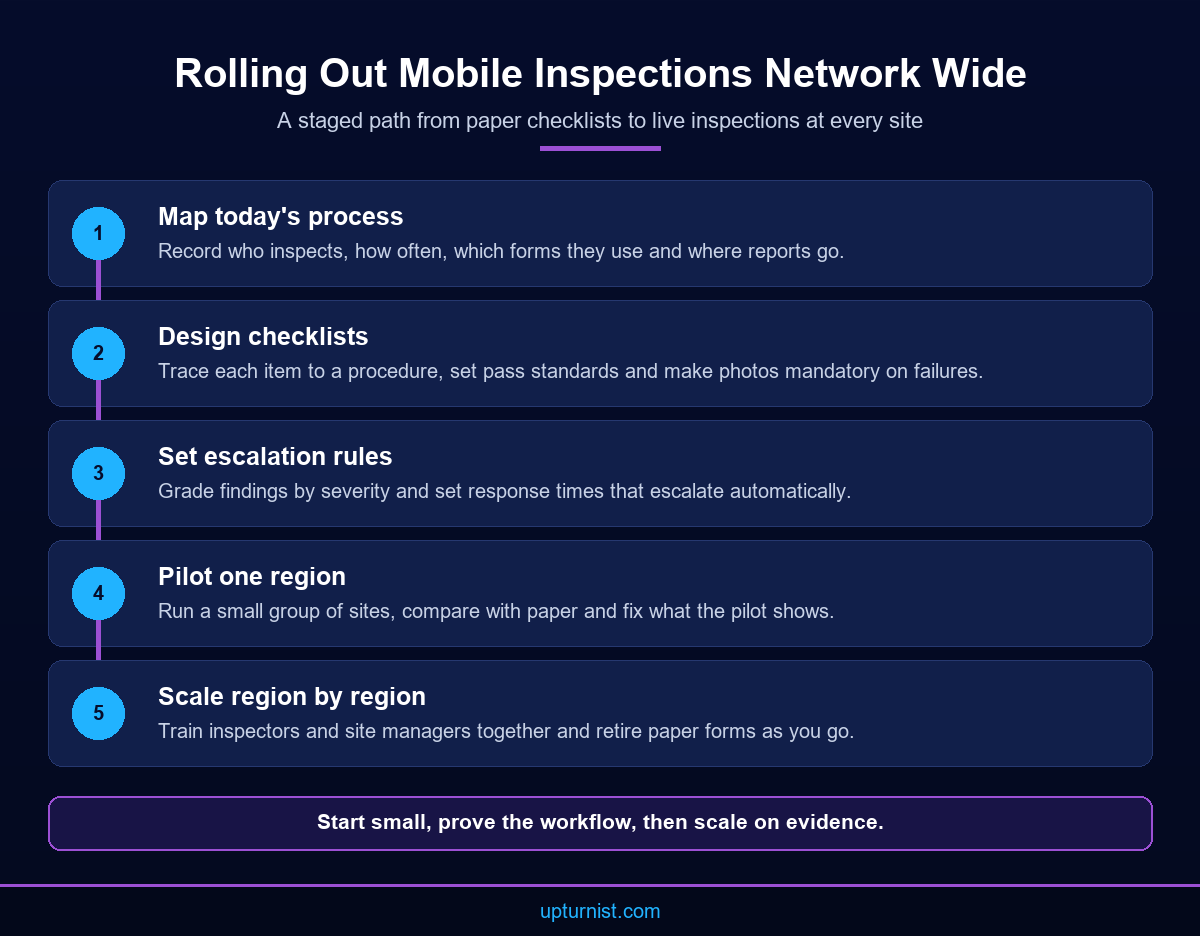
A network wide rollout succeeds when it starts small and scales on evidence. Pilot the HSE inspection app for fuel stations in one region, fix the checklist and workflows, then expand. Train inspectors and site managers together, because both sides of the workflow must change. A staged plan keeps the business running while the new system settles.
Begin by mapping the current inspection process, including who inspects, how often and where reports go. Then design the digital checklist and workflow rules with your HSE team. Pilot with a small group of sites and compare results with the paper process. Once the pilot is stable, roll out region by region and switch off paper forms as each region goes live.
Measure the rollout with simple indicators you already care about. Track inspections completed on schedule, open findings by severity and how long corrective actions take to close. An HSE inspection automation platform makes these figures available without manual reporting, so progress rests on real data rather than impressions.
Location data helps at scale. GPS capture confirms that an inspection took place on site, and map views show where open issues cluster. For the wider picture of inspections, quality checks, digital SOPs and dashboards, see our operational excellence solutions.
Conclusion
Inspecting hundreds of sites on paper leaves management blind to open risks. An HSE inspection automation platform changes that by standardising checklists, capturing evidence in the field and routing findings automatically. The fuel distribution case study shows the result in practice, from mobile inspections to a complete digital audit history. Upturnist works business first, process second and technology third, so procedures and escalation rules come before screens. Start with sound procedures, design checklists carefully and roll out in stages. When you are ready to plan an inspection system for your own network, speak with our consultants about an implementation focused approach.
Frequently Asked Questions
What is an HSE inspection automation platform?
It is a digital system that runs safety inspections end to end. Inspectors complete standard checklists on a mobile app, findings route automatically to the right people, corrective actions are tracked to closure, and managers see results on live dashboards.
What should an HSE inspection app for fuel stations include?
It should include standard digital checklists, photo evidence and GPS location capture. It should also submit results in real time and connect to workflows that assign, track and escalate corrective actions, so no finding is lost after the visit.
How does automation improve corrective action tracking?
Each failed item becomes an assigned action with an owner and a due date. The system sends reminders and escalates overdue actions automatically. Managers see open actions on a dashboard instead of chasing updates by phone or email.
Can one platform handle HSE and quality inspections?
Yes. The same mobile checklists, workflows and dashboards can serve both. A similar approach was used for quality and ISO compliance in oil and gas, with ISO based digital checklists, non-conformance tracking and complete audit trails.
Why use GPS and photos in inspections?
GPS confirms the inspection took place at the right site, and photos show the condition the inspector found. Together they make records harder to dispute and help managers judge severity without visiting every location themselves.
Do dashboards replace site visits by managers?
No. Dashboards show where to focus, so managers visit the sites with recurring or serious issues. Visits then become targeted and better prepared, rather than routine tours that may miss the real problems on the ground.
How do we keep checklists relevant over time?
Review results regularly. Remove questions that never fail, sharpen ones that inspectors read differently, and add items when incidents or procedure changes reveal new risks. Each change should follow a simple approval step and be versioned.
Which industries use mobile inspection platforms?
Any organisation that inspects many locations can benefit. The case study lists oil and gas, fuel distribution, utilities, manufacturing, construction, facility management, logistics, retail chains and government organisations among the suitable users of this approach.
Where should we start with inspection automation?
Start by mapping how inspections run today and where reports go. The consultants at Upturnist can assess the process, define requirements and plan a staged rollout that fits your network and your internal HSE standards.